9 Best External Hard Drives for Video Editing (November 2026)
The best external hard drives for video editing include the Aiolo Innovation 500GB External Hard Drive Ultra Slim Portable HDD for most editing setups, the LaCie Rugged USB-C 4TB for field shoots, and the Seagate Portable 4TB (best all-round portable capacity).
On this page (13 sections)
- The best external hard drives for video editing at a glance
- Aiolo Innovation 500GB External Hard Drive: best for most editing setups
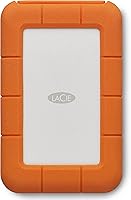
- LaCie Rugged USB-C 4TB: best for field shoots
- Seagate Portable 4TB: best all-round portable capacity
- YOTUO 1TB External Hard Drive: best budget-friendly starter
- Seagate Expansion Desktop 6TB: best for archive storage
- UnionSine 1TB Ultra Slim Portable External Hard: best slim everyday drive
- WD Elements Portable 6TB: best portable capacity
- WD My Passport 5TB: best for encrypted project files
- SSK Portable SSD 1TB: best for fast 4K editing
- How we compared these drives
- What should you look for in a video editing drive?
- Which external hard drive should you buy for video editing?
The best external hard drive for video editing is the Aiolo Innovation 500GB, a light, quiet drive with USB 3.0 transfers fast enough for everyday 1080p timelines. Pick the SSK Portable SSD 1TB for active 4K work, the LaCie Rugged 4TB for field shoots, or the Seagate Expansion Desktop 6TB to archive finished projects.
Video editing puts different demands on a drive than photo work or everyday backup. Footage files are large, timelines read and write constantly, and projects often move between a laptop, a desk and a shoot location.
Speed matters while you edit, capacity matters when you archive, and protection matters when the drive travels.
A mechanical hard drive is the budget answer for most editors, since a portable HDD delivers a usable 100MB/s or more and costs far less per terabyte than an SSD. An SSD is the smoother option for large 4K files and long scrubbing sessions.
The right mix is often one fast drive for the project you are cutting and a larger HDD for everything else.
If you are shopping mainly by size, our best 4TB external hard drive roundup goes deeper on that capacity. Editors who also back up photo libraries should read the external hard drive for photographers guide.
Our picks at a glance
-
1
 Best for most editing setups
Aiolo Innovation 500GB External Hard Drive Ultra Slim Portable HDD
9.4/10 our score
See it on Amazon -
2

-
3

The best external hard drives for video editing at a glance
The Aiolo Innovation 500GB is the best all-round pick for most editors, while each other drive here wins on a specific need: field protection, portable capacity, archive room or 4K speed. The comparison table below lines up the key specs side by side.
| Product | Best for | Capacity | Interface | Form factor | Our score |
|---|---|---|---|---|---|
| Aiolo Innovation 500GB External Hard Drive Ultra Slim Portable HDD | most editing setups | 500 GB | USB 3.0 | 2.5-inch portable | 9.4 |
| LaCie Rugged USB-C 4TB | field shoots | 4 TB | USB-C (USB 3.0 adapter included) | 2.5-inch portable | 8.7 |
| Seagate Portable 4TB | all-round portable capacity | 4 TB | USB 3.0 | 2.5-inch portable | 8.6 |
| YOTUO 1TB External Hard Drive | budget-friendly starter | 1 TB | USB 3.0 and USB Type-C | 2.5-inch portable | 8.6 |
| Seagate Expansion Desktop 6TB | archive storage | 6 TB | USB 3.0 | 3.5-inch desktop | 8.6 |
| UnionSine 1TB Ultra Slim Portable External Hard | slim everyday drive | 1 TB | USB 3.0 | 2.5-inch portable | 8.4 |
| WD Elements Portable 6TB | portable capacity | 6 TB | USB 3.2 Gen 1 | 2.5-inch portable | 8.2 |
| WD My Passport 5TB | encrypted project files | 5 TB | USB 3.0 and USB 3.2 compatible | 2.5-inch portable | 8.1 |
| SSK Portable SSD 1TB | fast 4K editing | 1 TB | USB 3.2 Gen 2 | 2.5-inch portable SSD | 7.6 |
The scores weigh each drive's specs and features against what a video editor actually needs: transfer speed, capacity for footage, portability and data protection. A 5400 rpm portable HDD cannot match an SSD's read speed, so a lower score does not mean a bad drive.
It means the drive serves a narrower job.
Aiolo Innovation 500GB External Hard Drive: best for most editing setups
Aiolo Innovation 500GB External Hard Drive Ultra Slim Portable HDD: Best for most editing setups
- USB 3.0 with read speeds up to 110MB/s to 133MB/s
- Write speeds up to 103MB/s
- 2.5-inch 5400 rpm mechanical drive
- Aluminum and glass enclosure
A light, quiet 500GB portable drive with fast USB 3.0 transfers. It gives you a dependable first editing drive without the bulk of a desktop unit.
Pros
- Light at 0.22 kg
- Quiet operation
- USB to Type-C adapter included
Cons
- 500GB fills quickly with 4K footage
- Mechanical drive, not an SSD
Aiolo Innovation's 500GB portable drive suits an editor who is starting out or working on 1080p projects and wants a dependable place to keep footage. It weighs 0.22 kg, so it disappears into a laptop bag next to a charger.
Its USB 3.0 connection moves data at theoretical read speeds of 110MB/s to 133MB/s and writes up to 103MB/s. That is quick enough for copying camera cards and cutting 1080p timelines without the wait of an older USB 2.0 drive.
The 5400 rpm mechanical disk is the honest limit here: large 4K files will copy slower than on the SSD pick below.
The drive runs quietly, thanks to a noise-free motherboard solution and an aluminum layer that also helps spread heat. A USB to Type-C adapter in the box means it connects to modern laptops and tablets without a separate cable.
The package also includes the USB 3.0 cable, a user manual and a three-year manufacturer warranty.
The trade-off is capacity. 500GB fills quickly once you keep raw footage as well as exports, so plan a second drive for archives.
Buy it as the active project drive for a lean setup.
LaCie Rugged USB-C 4TB: best for field shoots
LaCie Rugged USB-C 4TB: Best for field shoots
- MIL-STD-810F drop resistance up to 4 ft
- IP52 dust and drip protection
- 1-ton crush resistance
- 256-bit AES hardware encryption
A tough 4TB drive built for travel, with encryption and recovery cover. It suits editors who carry footage between locations and need protection from drops, dust and rain.
Pros
- Drop, dust and rain resistant
- Hardware encryption
- Three-year warranty with recovery services
Cons
- Premium price for an HDD
- Heavier and bulkier than slim drives
LaCie's Rugged 4TB is the drive to take on location. Its rubber bumper and aluminum body are rated to MIL-STD-810F for drops up to 4 ft, with IP52 dust and drip protection and 1-ton crush resistance.
A drive that lives in a camera bag gets knocked about, and this is the one here built for that.
Capacity is generous at 4TB, enough for a full day of capture plus a project library. The USB-C cable fits modern laptops, and an included USB 3.0 adapter covers older machines.
Its 5Gb/s interface is the same speed class as the other portable HDDs here. The drive measures 3.5 by 2.3 by 0.87 inches, so it takes up more room in a pocket than a slim drive but still fits a camera bag.
LaCie adds 256-bit AES hardware encryption and password protection, which matters if a drive with client footage goes missing. The package also includes a three-year limited warranty and Rescue Data Recovery Services.
A complimentary month of Adobe Creative Cloud All Apps is included as well.
The cons are weight and price. It costs more than a plain portable drive of the same capacity, and the bumper makes it chunkier in a pocket.
For an editor who never leaves the desk, that protection is money spent on features you won't use.
For a shooter, it earns its keep.
Seagate Portable 4TB: best all-round portable capacity
Seagate Portable 4TB: Best all-round portable capacity
- 4TB in a compact portable body
- USB 3.0 plug-and-play
- Works with Windows and Mac
- 18-inch USB cable included
A simple 4TB portable drive with plenty of room for a project library. It needs no software and moves between Mac and Windows machines without fuss.
Pros
- Big 4TB capacity
- No software to install
- Small enough for a laptop bag
Cons
- Mechanical drive speed, not SSD
- No hardware encryption
Seagate's Portable 4TB is the straightforward answer when you want lots of room in a drive that still fits in a bag. It works on Windows and Mac without software, so you can move a project between machines by dragging and dropping the folder.
Setup is as simple as it gets: connect the drive and the computer recognizes it. An 18-inch USB 3.0 cable is included, long enough to reach a port on a laptop stand without an extension.
The 2.5-inch form factor keeps the footprint small. It carries a one-year Rescue Data Recovery Services plan.
The 4TB capacity holds a solid project library, and the price per terabyte is far below an SSD's. Its mechanical disk is rated at 7200 rpm, so copy large 4K cards in one go rather than expecting SSD speed.
There is no hardware encryption, so keep client footage on a drive you control or use the encrypted WD below.
Choose it for a roomy, fuss-free portable drive at a sensible price. Pass it over if you edit 4K multicam daily and need faster reads.
YOTUO 1TB External Hard Drive: best budget-friendly starter
YOTUO 1TB External Hard Drive: Best budget-friendly starter

- 1TB portable storage
- USB 3.0 and USB-C connectivity
- Patented silicone sleeve
- Weighs 0.16 kg
A light, inexpensive 1TB drive with a shock-absorbing sleeve. It gives new editors a roomy-enough place to start without spending on an SSD.
Pros
- Silicone sleeve adds drop protection
- USB-C and USB-A connectivity
- Very light at 0.16 kg
Cons
- 1TB is tight for long 4K projects
- Mechanical drive, not an SSD
YOTUO's 1TB drive gives a new editor a workable amount of room for a low outlay. It connects over USB 3.0 or USB-C, so it works with laptops that have dropped the old rectangular port, and it weighs just 0.16 kg.
Its footprint of 4.49 by 3.15 by 0.7 inches is compact enough for a small messenger bag.
The patented silicone sleeve is the feature that stands out for travel. It cushions the drive against bumps, which is more than most budget portables offer.
At 1TB, this drive holds a short project or a season of 1080p footage. It runs as a mechanical 2.5-inch hybrid drive at 7200 rpm, so it moves files at hard-drive speeds rather than SSD speeds.
For 4K work you'll want more room and more speed. The USB 3.0 link is rated at 5Gbps, the same speed class as the rest of the hard drives here.
The trade-off is future headroom. If you shoot long-form or 4K, plan to add a bigger drive within a year.
As a first editing drive for a student or a hobbyist, it's the cheapest way into the list.
Seagate Expansion Desktop 6TB: best for archive storage
Seagate Expansion Desktop 6TB: Best for archive storage

- 6TB desktop capacity
- USB 3.0 transfers
- Drag-and-drop setup
- Rescue Data Recovery Services included
A mains-powered 6TB desktop drive for finished projects and footage you don't touch every day. Its size makes it a shelf unit, not a bag drive.
Pros
- 6TB of archive room
- No software needed
- Recovery services included
Cons
- Needs a power adapter
- Not built for carrying around
Seagate's Expansion Desktop 6TB is an archive drive first. Its 6TB capacity holds years of finished projects, exported masters and the raw footage you keep for future re-edits, and it costs less per terabyte than any portable option here.
It's a 3.5-inch desktop unit, so it sits on a shelf and draws power from a bundled 18W adapter. Its footprint is about 8.6 by 8.4 by 3 inches, which needs real desk or shelf space.
File transfers run over USB 3.0 at the same speed class as the portable drives, which is fine for moving finished work. Setup needs no software, though Mac users who want Time Machine should reformat the drive first.
The included Rescue Data Recovery Services and limited warranty add peace of mind for the drive holding your only copy of old footage. That matters more for an archive than for an active project drive.
The trade-off is clear: it needs a wall outlet and a desk, so it is not a bag drive. Buy it as the second drive in a two-drive system, with a portable drive handling active work.
Our best desktop external hard drive guide covers more options in this class.
UnionSine 1TB Ultra Slim Portable External Hard: best slim everyday drive
UnionSine 1TB Ultra Slim Portable External Hard: Best slim everyday drive

- Ultra-thin 0.5-inch body
- USB 3.0 read speeds up to 125MB/s
- JMicron 578 quiet controller
- Three-year manufacturer warranty
A pocket-thin 1TB drive with quiet operation and steady USB 3.0 speeds. It suits editors who shuttle small projects between machines.
Pros
- Very slim at 0.5 inch
- Quiet running
- Three-year warranty
Cons
- 1TB fills fast with raw footage
- Mechanical drive, not an SSD
UnionSine's 1TB drive is the slimmest pick here at 0.5 inch thick. That matters when your bag is already full of a laptop, a charger and a card reader: this drive takes up about as much space as a phone.
Its 4.56 by 3.15 inch face is small enough to slide into a laptop sleeve.
It pairs a JMicron 578 controller with USB 3.0 for theoretical read speeds up to 125MB/s and writes up to 103MB/s. The design runs quietly and spreads heat through the aluminum layer around the chip.
The striped, non-slip shell and rounded corners make it easier to grip when you pull it out of a bag. A three-year manufacturer warranty is included.
The 1TB capacity suits a single active project or a small footage library. At 5400 rpm, it's a mechanical drive, so expect hard-drive copy times for large cards rather than SSD speed.
Windows will show roughly 931GB of usable space on a 1TB drive because of decimal-to-binary calculation.
Choose it when portability and a quiet desk matter more than raw speed or large capacity. Skip it if your projects run to terabytes of footage.
WD Elements Portable 6TB: best portable capacity
WD Elements Portable 6TB: Best portable capacity

- 6TB in a 2.5-inch portable body
- USB 3.2 Gen 1 (5Gbps)
- Plug-and-play on PC and Mac
- Light for its capacity
The largest portable capacity here, in a drive you can still slip into a backpack. It works as a single-library drive for editors who move between desks.
Pros
- 6TB without a power brick
- USB 3.2 Gen 1 speed
- Simple plug-and-play setup
Cons
- Mechanical drive speed
- No hardware encryption
WD's Elements Portable packs 6TB into a 2.5-inch drive you can carry. It's the largest portable capacity here, so you can keep an entire project library on one drive and still move between a desk and a set without a power brick.
The USB 3.2 Gen 1 interface runs at 5Gbps, the same speed class as USB 3.0, and setup is plug and play on PC and Mac. The drive weighs little for its size and fits in a backpack side pocket.
Many editors use one drive like this as their main library and a desktop unit as the backup. The box includes a SuperSpeed USB-A cable and a quick install guide.
The mechanical disk inside is the speed limit. It copies large 4K cards at hard-drive speed, so plan transfers around a coffee break.
There is no built-in encryption, so keep it with you or use a password-protected drive for sensitive footage.
Pick it if you want the most capacity in a drive you can carry. Skip it if you need SSD speed for active 4K editing.
Our Windows PC external drive guide covers compatibility in more detail.
WD My Passport 5TB: best for encrypted project files
WD My Passport 5TB: Best for encrypted project files

- 5TB portable storage
- Password protection and hardware encryption
- Backup software with ransomware defense
- Three-year limited warranty
A 5TB portable drive with built-in encryption and backup software. It suits editors whose project files leave the studio and need to stay locked.
Pros
- Hardware encryption with password
- Backup software included
- Slim portable design
Cons
- Mechanical drive speed
- Encryption means you need the password on every machine
WD's My Passport 5TB suits editors who take client footage off site. It offers 5TB in a slim portable body, with password protection and 256-bit hardware encryption built in.
If the drive is lost or stolen, the files stay locked without the password.
It also includes backup software with defense against ransomware. That gives you a way to schedule backups of a project folder without buying separate software.
The drive carries a three-year limited warranty. Its aluminum and glass-style enclosure keeps the profile slim, so it fits a laptop bag beside a charger.
Its USB 3.0 interface works with USB 3.2 ports, and the mechanical disk runs at hard-drive speed. The encryption has a cost in daily use: you'll need the password on every machine you plug into, so keep it in a safe place you can reach from a shoot location.
Choose it for confidential work or when your projects travel. Pass it over if you want the fastest possible transfer speeds for large 4K files.
SSK Portable SSD 1TB: best for fast 4K editing
SSK Portable SSD 1TB: Best for fast 4K editing

- Read speeds up to 1050MB/s
- Write speeds up to 1000MB/s
- USB-C and USB-A cables
- Aluminum case weighs 36.6g
A pocket SSD with 10Gbps transfers for active timelines and 4K footage. It costs more per gigabyte than an HDD but cuts wait time during editing.
Pros
- SSD speeds up to 1050MB/s
- Small and light at 36.6g
- SLC caching for steady transfers
Cons
- 1TB only
- Higher cost per gigabyte than an HDD
SSK's Portable SSD 1TB is the fast pick. Its 10Gbps USB 3.2 Gen 2 connection reaches read speeds up to 1050MB/s and writes up to 1000MB/s, so large 4K files copy in a fraction of the time a mechanical drive needs.
Scrolling a timeline feels smoother when footage sits on an SSD.
The aluminum case weighs just 36.6g and stays cool enough to handle, with a peak temperature around 105.58 F. SLC caching keeps transfers steady within the cache, which covers most project work.
S.M.A.R.T. health diagnostics and TRIM support help the drive keep its speed over time. USB-C and USB-A cables are both in the box.
It ships in exFAT, so it opens on Windows and Mac without reformatting.
The trade-off is cost per gigabyte and capacity. 1TB is small for a full library, and the drive costs more than a 4TB hard drive.
The smart setup is this SSD for the active timeline plus a big HDD for everything else.
Windows may report roughly 931GB of space because of binary calculation.
Buy it if you cut 4K daily and time is money. Skip it if you mostly archive footage and only edit occasionally.
For more large-capacity choices, see the best desktop external hard drive list.
How we compared these drives
We checked the specs of each drive against what video editing actually demands: read and write speeds, interface type, capacity, portability and data protection. We weighed mechanical drives against SSDs on cost per terabyte and fit for 1080p versus 4K timelines.
We also looked at the extras that change daily use: included cables, encryption, recovery services and warranty length. A drive that needs an adapter for your laptop, or one without a cable for USB-C, costs you extra time on day one.
We scored each drive on how well those specs fit the editor shopping for it. Form factor counted too: a 3.5-inch desktop unit and a 2.5-inch portable drive solve different problems, even when their capacities match.
What should you look for in a video editing drive?
Start with speed and interface. A USB 3.0 mechanical drive moves about 100MB/s to 130MB/s, enough for 1080p and light 4K.
An SSD on USB 3.2 Gen 2 reaches 1000MB/s or more, which keeps large 4K files moving during edits. Match the interface to your computer's ports, and use an adapter only when you have to.
A drive with a USB to Type-C adapter in the box saves you buying one separately.
SSD or hard drive?
Pick an SSD for the footage you are editing right now. The speed keeps scrubbing and rendering smooth, and the small size suits a laptop bag.
Pick a mechanical hard drive for finished projects, backups and archives. Its lower cost per terabyte means you can keep more footage for less money.
Many editors run both: an SSD for active work and an HDD for storage.
How much capacity do you need?
Estimate your footage first. A rough rule is about 1GB per minute for 4K at moderate compression, so an hour of raw 4K is around 60GB before proxies.
A 500GB drive suits 1080p projects and short 4K clips. A 1TB drive covers a single larger project.
For a full library plus backups, look at 4TB or 6TB. Bear in mind that drives list capacity in decimal while Windows counts in binary, so a 1TB drive shows about 931GB.
Should you choose a portable or desktop drive?
A portable 2.5-inch drive runs off the USB port and fits in a bag, so it travels with you. A desktop 3.5-inch drive needs a power adapter and sits on a shelf, but it gives you more capacity per dollar.
If your editing stays in one room, a desktop drive is the better archive unit. If you move between locations, a portable drive earns its keep.
Why does drive protection matter for editors?
Footage is often the only copy of a shoot. A drop-resistant drive with dust and rain protection reduces the risk when it travels.
Hardware encryption protects client material if the drive goes missing. Recovery services and a longer warranty add cover for the drive holding your archive.
These extras raise the price, so match them to how much the drive leaves the desk. A plain drive that stays home does not need a rubber bumper.
How should you set up a drive for editing?
Copy footage from the camera card to the drive before you edit, and keep a second copy on another drive until the project is delivered. Leave free space on the drive, since a nearly full disk slows transfers.
Use the safe-eject command before unplugging, and keep a spare cable in your bag. Our best 4TB external hard drive guide covers larger-capacity options if your library is already growing.
Which external hard drive should you buy for video editing?
The best external hard drives for video editing balance speed, capacity and price against how you actually work. For most editors, the Aiolo Innovation 500GB is the drive to buy first: it's light, quiet and quick enough for 1080p timelines without spending on an SSD.
The rest of the list splits by need. Pick the SSK Portable SSD 1TB if you cut 4K daily and want the fastest transfers.
Pick the LaCie Rugged 4TB if footage travels to shoots. Pick the WD Elements Portable 6TB for the most capacity in a bag, or the Seagate Expansion Desktop 6TB to archive everything on a desk.
For encrypted client work, the WD My Passport 5TB is the safe choice.
If your work is photos rather than video, the external hard drive for photographers guide covers drives built around image libraries. Editors on Windows should also check the external hard drive for PC roundup for compatibility notes.
Our top 3 picks at a glance
-
1
Best for most editing setups
Aiolo Innovation 500GB External Hard Drive Ultra Slim Portable HDD
9.4/10 our score
See it on Amazon -
2
-
3
Frequently asked questions
Do you need an SSD or a hard drive for video editing?
Use an SSD for footage you are actively editing, since its faster read and write speeds keep timelines and scrubbing smooth. Use a mechanical hard drive for finished projects and archives, where capacity matters more than speed and the cost per terabyte is lower.
How much space does video editing need?
Budget about 1GB per minute of 4K footage at moderate compression, so a 500GB drive holds only a few hours of raw material. A 1TB drive suits a short project, while 4TB and 6TB drives give you room for a full library and backups.
Can you edit video directly from an external hard drive?
Yes, and many editors do. A USB 3.0 mechanical drive works for 1080p and light 4K, while an SSD on USB 3.2 Gen 2 keeps large 4K files moving smoothly.
Copy footage to the drive first and edit from there rather than leaving it on a full laptop.
Which external drive is best for carrying footage to a shoot?
The LaCie Rugged USB-C 4TB is the pick for field work, with drop, dust and rain resistance plus hardware encryption. Its 4TB capacity holds a full day of capture, and the USB-C cable fits modern laptops and tablets.
Is a desktop or portable hard drive better for video editing?
A portable drive is easier to move between edit stations and sets. A desktop drive gives you more capacity per dollar and a larger motor, but it needs a power outlet.
Many editors keep a portable drive for active work and a desktop unit for backups.